

RxRevu
Client
RxRevu (Arrive Health)
Role
Senior Product Designer
Timeline
6 weeks
Tools
Figma, Miro
RxRevu
Client
RxRevu (Arrive Health)
Role
Senior Product Designer
Timeline
6 weeks
Tools
Figma, Miro
RxRevu
Client
RxRevu (Arrive Health)
Role
Senior Product Designer
Timeline
6 weeks
Tools
Figma, Miro
RxRevu
Client
RxRevu (Arrive Health)
Role
Senior Product Designer
Timeline
6 weeks
Tools
Figma, Miro
The Brief
RxRevu, now named Arrive Health, is a Healthcare startup that works to improve care decisions for patients and providers, improving affordability, access, and outcomes — all while reducing administrative burden. It aims to enhance healthcare decisions by improving affordability, access, and outcomes and reducing administrative burdens. The team comprised a Product Designer and a Product Owner, which spanned over six weeks. The primary task was to update several validated application features into an existing interface, aligning with the core mission of RxRevu.
The Brief
RxRevu, now named Arrive Health, is a Healthcare startup that works to improve care decisions for patients and providers, improving affordability, access, and outcomes — all while reducing administrative burden. It aims to enhance healthcare decisions by improving affordability, access, and outcomes and reducing administrative burdens. The team comprised a Product Designer and a Product Owner, which spanned over six weeks. The primary task was to update several validated application features into an existing interface, aligning with the core mission of RxRevu.
The Brief
RxRevu, now named Arrive Health, is a Healthcare startup that works to improve care decisions for patients and providers, improving affordability, access, and outcomes — all while reducing administrative burden. It aims to enhance healthcare decisions by improving affordability, access, and outcomes and reducing administrative burdens. The team comprised a Product Designer and a Product Owner, which spanned over six weeks. The primary task was to update several validated application features into an existing interface, aligning with the core mission of RxRevu.
The Brief
RxRevu, now named Arrive Health, is a Healthcare startup that works to improve care decisions for patients and providers, improving affordability, access, and outcomes — all while reducing administrative burden. It aims to enhance healthcare decisions by improving affordability, access, and outcomes and reducing administrative burdens. The team comprised a Product Designer and a Product Owner, which spanned over six weeks. The primary task was to update several validated application features into an existing interface, aligning with the core mission of RxRevu.
The Problem
The RxRevu project's core challenge was integrating numerous validated application features into an existing interface without disrupting the overall user experience. The complexity of this task was compounded by the need to ensure that the updated interface remained intuitive and user-friendly, especially in a healthcare setting where ease of use is critical.
The Problem
The RxRevu project's core challenge was integrating numerous validated application features into an existing interface without disrupting the overall user experience. The complexity of this task was compounded by the need to ensure that the updated interface remained intuitive and user-friendly, especially in a healthcare setting where ease of use is critical.
The Problem
The RxRevu project's core challenge was integrating numerous validated application features into an existing interface without disrupting the overall user experience. The complexity of this task was compounded by the need to ensure that the updated interface remained intuitive and user-friendly, especially in a healthcare setting where ease of use is critical.
The Problem
The RxRevu project's core challenge was integrating numerous validated application features into an existing interface without disrupting the overall user experience. The complexity of this task was compounded by the need to ensure that the updated interface remained intuitive and user-friendly, especially in a healthcare setting where ease of use is critical.
The Process
Research & Strategy Development
User Interviews were conducted to gather in-depth insights into the end-users' needs, preferences, and pain points. This helped me understand how the existing interface was used and what improvements were necessary.
Consultation with Stakeholders & SMEs (Subject Matter Experts): Engaged with experts to gain a comprehensive understanding of the healthcare domain, especially the nuances of medical insurance, billing, and healthcare technology. This was crucial to ensure that the design solutions adhered to industry standards and met the specific needs of the healthcare sector.
Design & Implementation
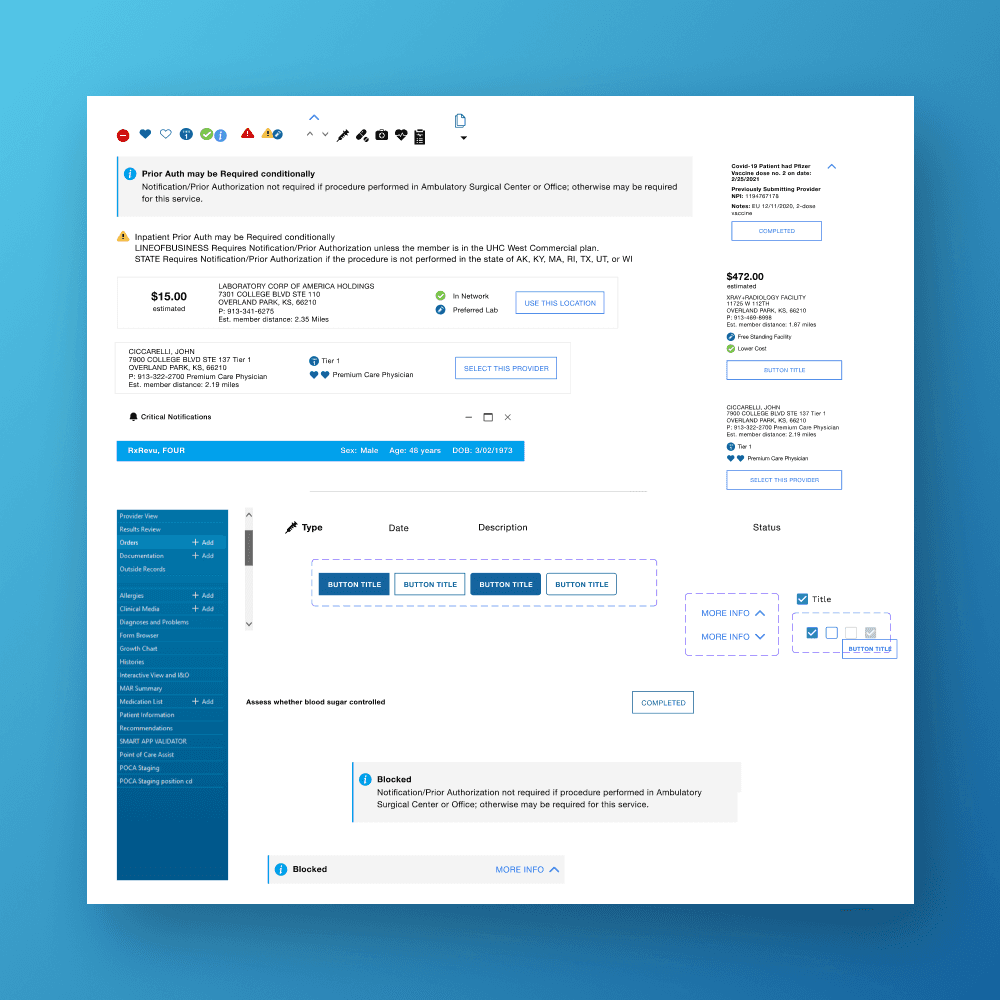
Wireframes were developed, and initial sketches and wireframes were created to outline the basic structure and layout of the updated interface. This step was essential for visualizing the placement of the new features and understanding how they would integrate with the existing elements.
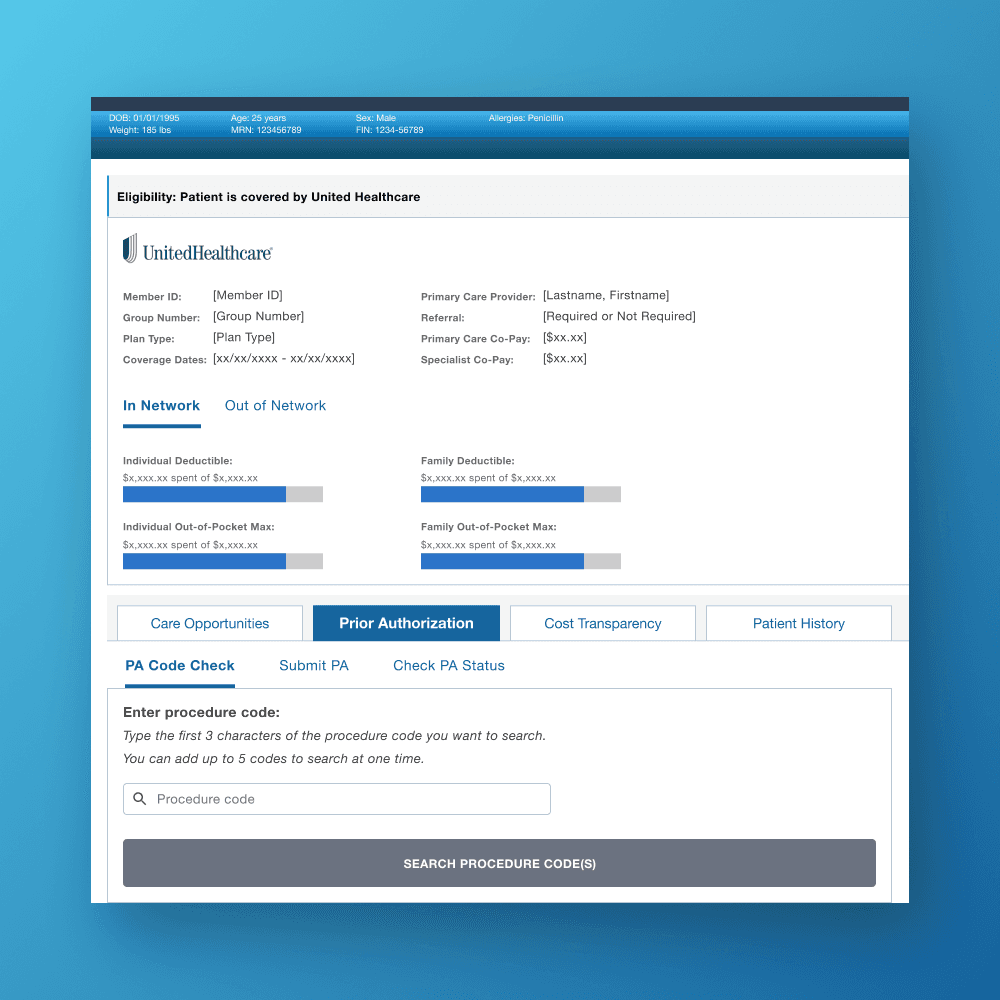
High-fidelity Prototypes were created with detailed high-fidelity interactive prototypes to simulate the user experience with the new features. This allowed for the demonstration of complex interactions and provided a tangible representation of the final product for stakeholder review feedback and handoff to the engineering team.
Tools and Technologies: Utilized tools like Miro for brainstorming and collaboration and Figma for designing and prototyping. These tools facilitated a streamlined and efficient design process, enabling the team to create high-quality designs and prototypes.
The Process
Research & Strategy Development
User Interviews were conducted to gather in-depth insights into the end-users' needs, preferences, and pain points. This helped me understand how the existing interface was used and what improvements were necessary.
Consultation with Stakeholders & SMEs (Subject Matter Experts): Engaged with experts to gain a comprehensive understanding of the healthcare domain, especially the nuances of medical insurance, billing, and healthcare technology. This was crucial to ensure that the design solutions adhered to industry standards and met the specific needs of the healthcare sector.
Design & Implementation
Wireframes were developed, and initial sketches and wireframes were created to outline the basic structure and layout of the updated interface. This step was essential for visualizing the placement of the new features and understanding how they would integrate with the existing elements.
High-fidelity Prototypes were created with detailed high-fidelity interactive prototypes to simulate the user experience with the new features. This allowed for the demonstration of complex interactions and provided a tangible representation of the final product for stakeholder review feedback and handoff to the engineering team.
Tools and Technologies: Utilized tools like Miro for brainstorming and collaboration and Figma for designing and prototyping. These tools facilitated a streamlined and efficient design process, enabling the team to create high-quality designs and prototypes.
The Process
Research & Strategy Development
User Interviews were conducted to gather in-depth insights into the end-users' needs, preferences, and pain points. This helped me understand how the existing interface was used and what improvements were necessary.
Consultation with Stakeholders & SMEs (Subject Matter Experts): Engaged with experts to gain a comprehensive understanding of the healthcare domain, especially the nuances of medical insurance, billing, and healthcare technology. This was crucial to ensure that the design solutions adhered to industry standards and met the specific needs of the healthcare sector.
Design & Implementation
Wireframes were developed, and initial sketches and wireframes were created to outline the basic structure and layout of the updated interface. This step was essential for visualizing the placement of the new features and understanding how they would integrate with the existing elements.
High-fidelity Prototypes were created with detailed high-fidelity interactive prototypes to simulate the user experience with the new features. This allowed for the demonstration of complex interactions and provided a tangible representation of the final product for stakeholder review feedback and handoff to the engineering team.
Tools and Technologies: Utilized tools like Miro for brainstorming and collaboration and Figma for designing and prototyping. These tools facilitated a streamlined and efficient design process, enabling the team to create high-quality designs and prototypes.
The Process
Research & Strategy Development
User Interviews were conducted to gather in-depth insights into the end-users' needs, preferences, and pain points. This helped me understand how the existing interface was used and what improvements were necessary.
Consultation with Stakeholders & SMEs (Subject Matter Experts): Engaged with experts to gain a comprehensive understanding of the healthcare domain, especially the nuances of medical insurance, billing, and healthcare technology. This was crucial to ensure that the design solutions adhered to industry standards and met the specific needs of the healthcare sector.
Design & Implementation
Wireframes were developed, and initial sketches and wireframes were created to outline the basic structure and layout of the updated interface. This step was essential for visualizing the placement of the new features and understanding how they would integrate with the existing elements.
High-fidelity Prototypes were created with detailed high-fidelity interactive prototypes to simulate the user experience with the new features. This allowed for the demonstration of complex interactions and provided a tangible representation of the final product for stakeholder review feedback and handoff to the engineering team.
Tools and Technologies: Utilized tools like Miro for brainstorming and collaboration and Figma for designing and prototyping. These tools facilitated a streamlined and efficient design process, enabling the team to create high-quality designs and prototypes.
The Results
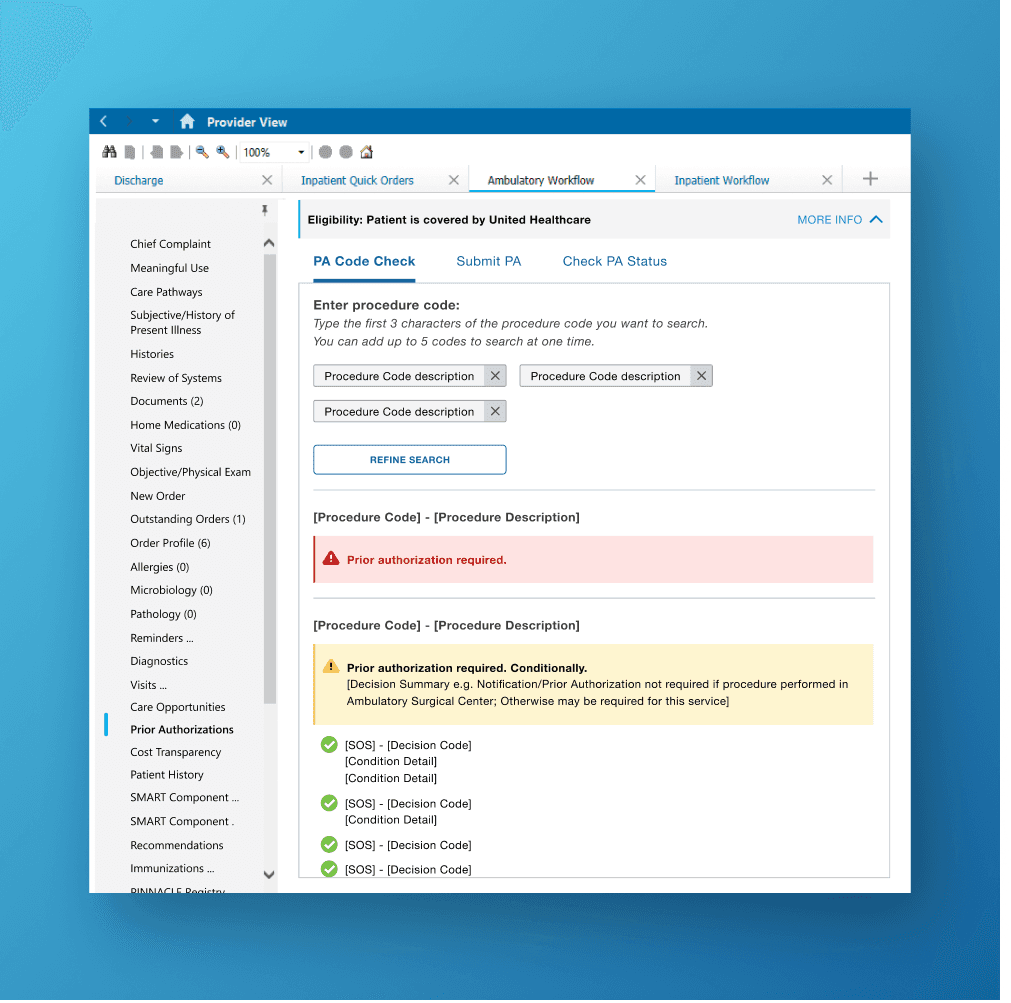
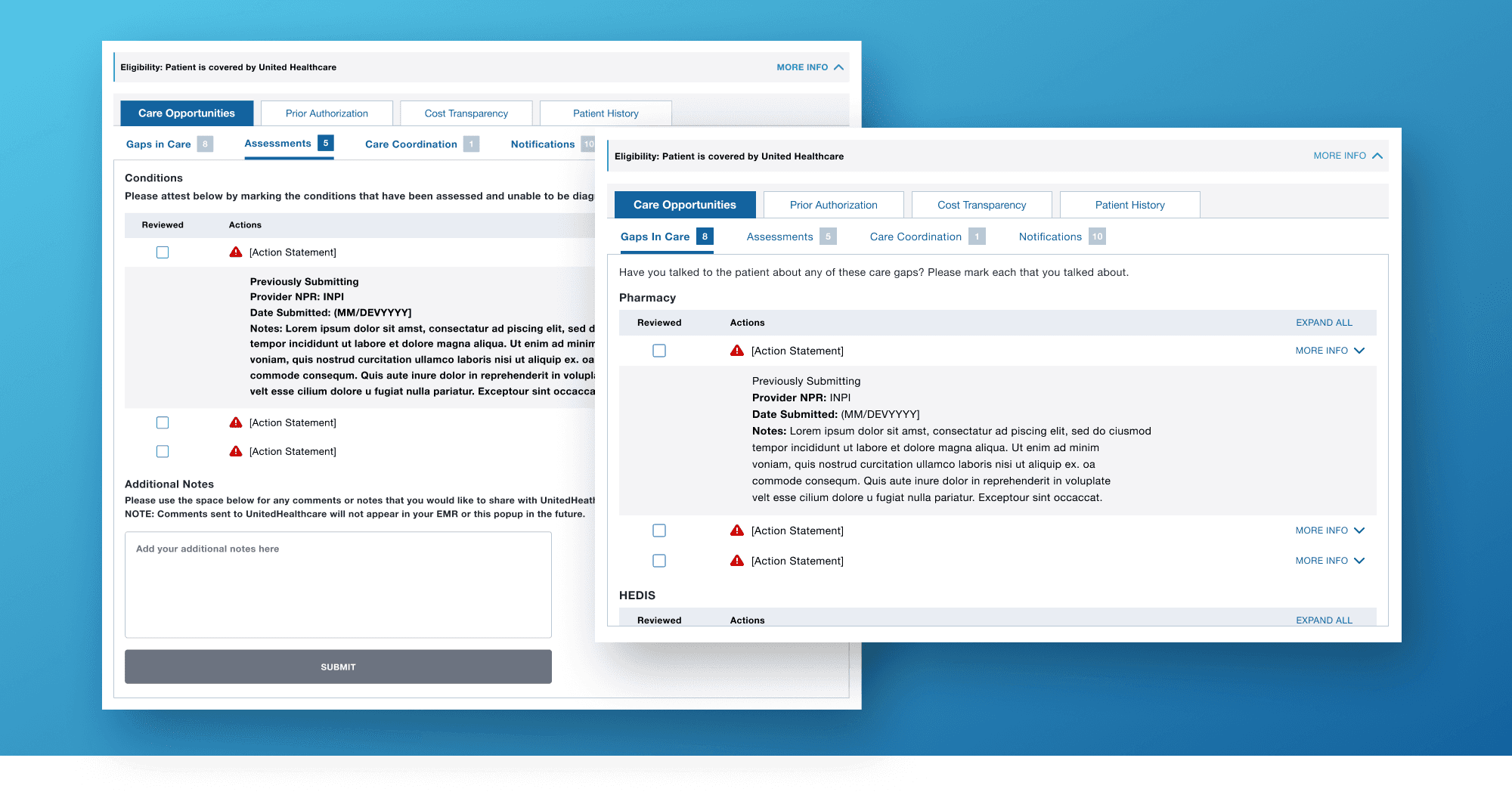
The result was a series of high-fidelity interactive prototypes that displayed multiple complex interactions, aligning with the initial business and user experience goals. While quantitative results were not specified, the qualitative feedback was overwhelmingly positive, with the client expressing satisfaction with the engagement's outcome. The project's success was evident as RxRevu grew into a well-established healthcare company.
The Results
The result was a series of high-fidelity interactive prototypes that displayed multiple complex interactions, aligning with the initial business and user experience goals. While quantitative results were not specified, the qualitative feedback was overwhelmingly positive, with the client expressing satisfaction with the engagement's outcome. The project's success was evident as RxRevu grew into a well-established healthcare company.
The Results
The result was a series of high-fidelity interactive prototypes that displayed multiple complex interactions, aligning with the initial business and user experience goals. While quantitative results were not specified, the qualitative feedback was overwhelmingly positive, with the client expressing satisfaction with the engagement's outcome. The project's success was evident as RxRevu grew into a well-established healthcare company.
The Results
The result was a series of high-fidelity interactive prototypes that displayed multiple complex interactions, aligning with the initial business and user experience goals. While quantitative results were not specified, the qualitative feedback was overwhelmingly positive, with the client expressing satisfaction with the engagement's outcome. The project's success was evident as RxRevu grew into a well-established healthcare company.
Reflections & Learnings
The project was both challenging and rewarding, offering a deep dive into the intricacies of medical insurance and healthcare providers. Despite the steep learning curve in understanding HIPAA, medical billing, and health tech, and the constraints in directly communicating with users due to privacy concerns, the reliance on Subject Matter Experts (SMEs), Product Owners, and other resources proved fruitful.
Reflections & Learnings
The project was both challenging and rewarding, offering a deep dive into the intricacies of medical insurance and healthcare providers. Despite the steep learning curve in understanding HIPAA, medical billing, and health tech, and the constraints in directly communicating with users due to privacy concerns, the reliance on Subject Matter Experts (SMEs), Product Owners, and other resources proved fruitful.
Reflections & Learnings
The project was both challenging and rewarding, offering a deep dive into the intricacies of medical insurance and healthcare providers. Despite the steep learning curve in understanding HIPAA, medical billing, and health tech, and the constraints in directly communicating with users due to privacy concerns, the reliance on Subject Matter Experts (SMEs), Product Owners, and other resources proved fruitful.
Reflections & Learnings
The project was both challenging and rewarding, offering a deep dive into the intricacies of medical insurance and healthcare providers. Despite the steep learning curve in understanding HIPAA, medical billing, and health tech, and the constraints in directly communicating with users due to privacy concerns, the reliance on Subject Matter Experts (SMEs), Product Owners, and other resources proved fruitful.